
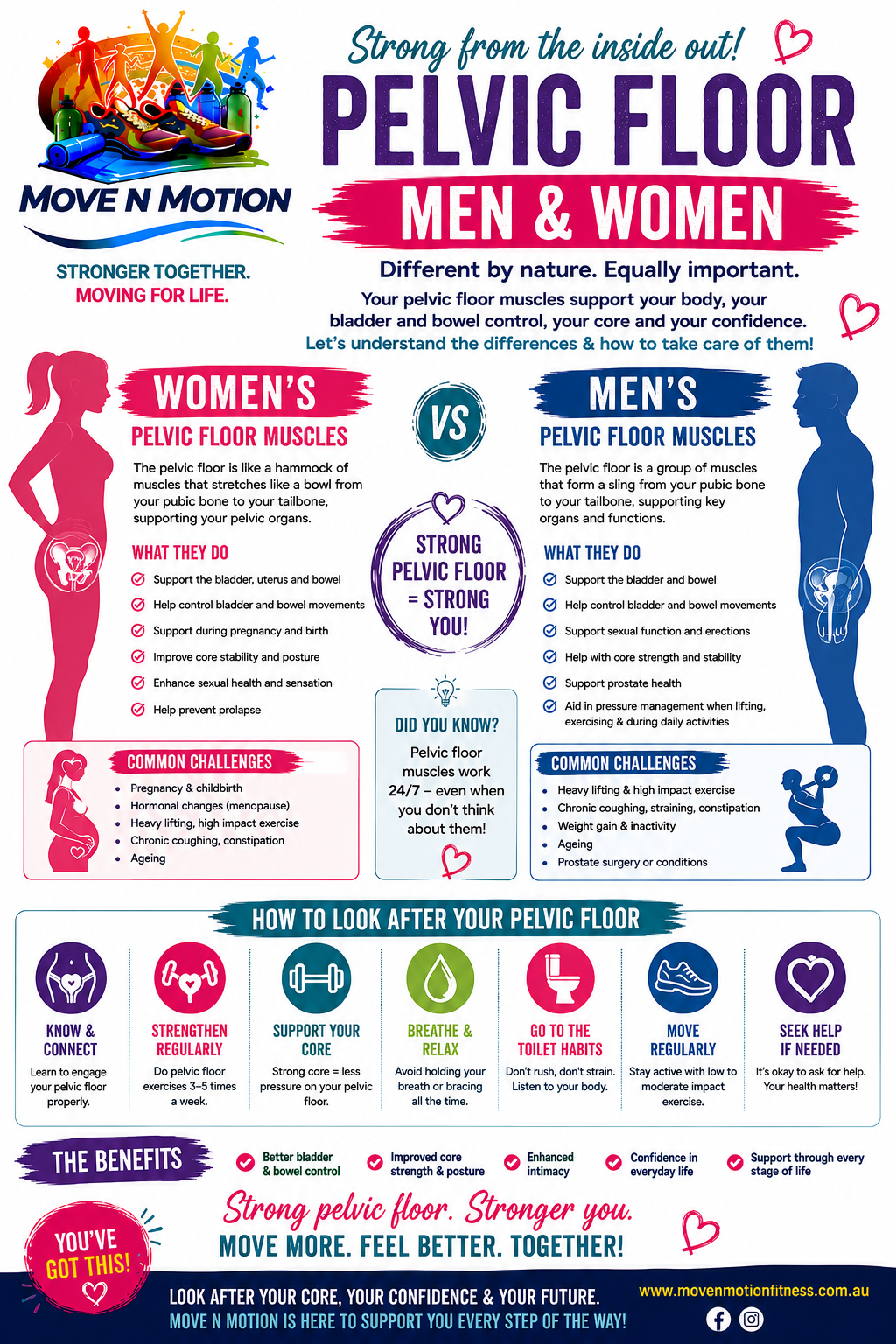
Understanding Your Pelvic Floor: Why It Matters for Both Men and Women
When people hear the words “pelvic floor”, they often think it’s only something women need to worry about after pregnancy. The truth is, everyone has a pelvic floor—men and women alike—and these muscles play a vital role in everyday health, movement and exercise.
A strong, healthy pelvic floor supports your bladder and bowel, works alongside your core muscles to stabilise your body, and contributes to better posture, balance and overall confidence. Whether you’re lifting shopping bags, chasing after children, exercising or simply getting out of a chair, your pelvic floor is working behind the scenes.
At Move N Motion, we believe that understanding how your body works is just as important as exercising it. Let’s take a closer look at what the pelvic floor does, how it differs between men and women, and how you can keep it healthy.
What Is the Pelvic Floor?
The pelvic floor is a group of muscles, ligaments and connective tissues that stretch like a hammock across the base of your pelvis.
These muscles support the organs within your pelvis and help control bladder and bowel function. They also work together with your diaphragm, abdominal muscles and back muscles to form your body’s “core.”
Think of your core as a cylinder:
- Top: Diaphragm
- Front and sides: Abdominal muscles
- Back: Deep spinal muscles
- Bottom: Pelvic floor muscles
When all of these muscles work together, they create a stable foundation for movement.
What Does the Pelvic Floor Do?
Although the anatomy differs slightly between men and women, the pelvic floor performs many of the same essential jobs.
The pelvic floor helps:
✅ Support the bladder
✅ Support the bowel
✅ Assist with bladder and bowel control
✅ Support your pelvic organs
✅ Stabilise your core
✅ Improve posture
✅ Assist with breathing and pressure management
✅ Support sexual function
Without healthy pelvic floor muscles, everyday activities can become more difficult.
Pelvic Floor Differences Between Women and Men
Although both sexes have pelvic floor muscles, their structure and responsibilities differ because of anatomy.
Women’s Pelvic Floor
The female pelvic floor supports:
- Bladder
- Uterus
- Vagina
- Rectum
Because there are openings for the urethra, vagina and rectum, the female pelvic floor has a greater supportive role.
Pregnancy and childbirth place significant demands on these muscles as they stretch to support a growing baby and, during vaginal birth, can stretch considerably.
Hormonal changes during menopause can also affect pelvic floor strength and tissue elasticity.
Men’s Pelvic Floor
The male pelvic floor supports:
- Bladder
- Prostate
- Rectum
These muscles assist with:
- Bladder control
- Bowel control
- Sexual function
- Supporting the prostate
- Core stability
Men may experience pelvic floor weakness following prostate surgery, prolonged heavy lifting, chronic coughing, constipation or simply with ageing.
Why Is the Pelvic Floor Important During Exercise?
Every time you move, your pelvic floor works alongside your core.
Activities such as:
- Squats
- Walking
- Lifting weights
- Climbing stairs
- Running
- Push-ups
- Carrying groceries
all increase pressure inside your abdomen.
A healthy pelvic floor helps manage this pressure while keeping your spine stable and supporting your organs.
If these muscles aren’t working well, symptoms may develop.
Signs Your Pelvic Floor May Need Attention
Some common signs include:
- Urine leakage when coughing, laughing or exercising
- Difficulty controlling wind
- A feeling of heaviness or pressure in the pelvis
- Frequent trips to the toilet
- Difficulty emptying the bladder completely
- Constipation caused by poor muscle coordination
- Pelvic pain
- Reduced confidence during exercise
These symptoms are common, but they are not a normal part of ageing and should not simply be accepted.
Common Causes of Pelvic Floor Weakness
For Women
- Pregnancy
- Vaginal birth
- Menopause
- Chronic constipation
- Repeated heavy lifting
- High-impact sport without adequate strength
- Obesity
- Persistent coughing
For Men
- Prostate surgery
- Heavy lifting
- Chronic coughing
- Chronic constipation
- Ageing
- Obesity
- High-impact activities without adequate core support
How to Keep Your Pelvic Floor Healthy
The good news is that, like most muscles, your pelvic floor can often become stronger with regular practice.
1. Learn to Perform Pelvic Floor Exercises Correctly
Pelvic floor exercises (often called Kegel exercises) involve gently lifting and tightening the muscles around your urethra and anus, as if you’re trying to stop the flow of urine or prevent passing wind. Avoid squeezing your buttocks or holding your breath.
A pelvic health physiotherapist can help ensure you’re using the correct muscles.
2. Strengthen Your Core
Your pelvic floor works closely with your deep abdominal muscles. Exercises such as:
- Dead bugs
- Bird dogs
- Glute bridges
- Modified planks
- Controlled breathing exercises
can help improve overall core function when performed correctly.
3. Breathe Properly
Holding your breath during exercise increases pressure inside your abdomen.
Instead:
- Breathe in before the effort.
- Breathe out during the hardest part of the movement.
This helps your core and pelvic floor work together more effectively.
4. Avoid Chronic Straining
Repeated straining when lifting or using the toilet places unnecessary stress on your pelvic floor.
To reduce strain:
- Stay hydrated.
- Eat plenty of fibre.
- Treat constipation early.
- Lift using good technique.
5. Maintain a Healthy Lifestyle
A healthy weight, regular physical activity and avoiding smoking can all reduce unnecessary pressure on the pelvic floor.
If you have a persistent cough, seek medical advice, as chronic coughing can weaken these muscles over time.
Pelvic Floor and Pregnancy
During pregnancy, pelvic floor exercises can help prepare the muscles for childbirth and support recovery afterwards.
After birth, many women benefit from gradually rebuilding pelvic floor and core strength before returning to higher-impact activities.
If you’ve recently had a baby, it’s generally recommended to receive clearance from your healthcare provider before resuming exercise, and a pelvic health assessment can be valuable.
Pelvic Floor and Prostate Health
For men, pelvic floor exercises are often recommended before and after prostate surgery to help improve bladder control and recovery.
Many men are surprised to learn that these muscles can also improve core stability and confidence during exercise.
Can You Overdo Pelvic Floor Exercises?
Yes.
A pelvic floor that’s too tight can also cause problems, including pelvic pain and difficulty relaxing the muscles.
That’s why it’s important to learn not only how to contract these muscles, but also how to fully relax them.
Balance is key.
How Move N Motion Supports Pelvic Floor Health
At Move N Motion, our instructor-led group fitness classes focus on safe, functional movement for people of all fitness levels.
You’ll regularly hear cues such as:
- “Engage your core.”
- “Breathe through the movement.”
- “Move with control.”
- “Focus on quality, not speed.”
These coaching points help encourage healthy movement patterns that support your core and pelvic floor during exercise.
Whether you’re new to exercise, returning after having a baby or simply wanting to improve your strength and confidence, our classes are designed to help you move safely and effectively.
Final Thoughts
Your pelvic floor is one of the most important muscle groups in your body, yet it’s often overlooked.
Both men and women rely on these muscles every day for bladder and bowel control, core stability, posture and movement. Looking after your pelvic floor through regular exercise, good lifting technique, healthy lifestyle habits and proper breathing can make a significant difference to your long-term health and quality of life.
Remember, if you’re experiencing symptoms such as leakage, pelvic pain or a feeling of heaviness, don’t ignore them. A GP or qualified pelvic health physiotherapist can assess your symptoms and recommend the most appropriate treatment.
At Move N Motion, we’re passionate about helping people build strength from the inside out. By improving your understanding of how your body works, you can move with greater confidence, reduce your risk of injury and enjoy exercise for years to come.
Join Move N Motion
Our friendly, instructor-led group fitness classes are suitable for all fitness levels and are available in Widgee, Glastonbury, Kilkivan and Gympie.
Book your class today at:
www.movenmotionfitness.com.au