Why Arch Support Matters: Choosing the Right Runners for Exercise
Your feet are your foundation. Every time you walk, squat, jog, jump or participate in a fitness class, your feet absorb forces and help keep your body balanced and moving efficiently.
That’s why choosing a comfortable, supportive pair of runners is an important part of looking after your feet during exercise.
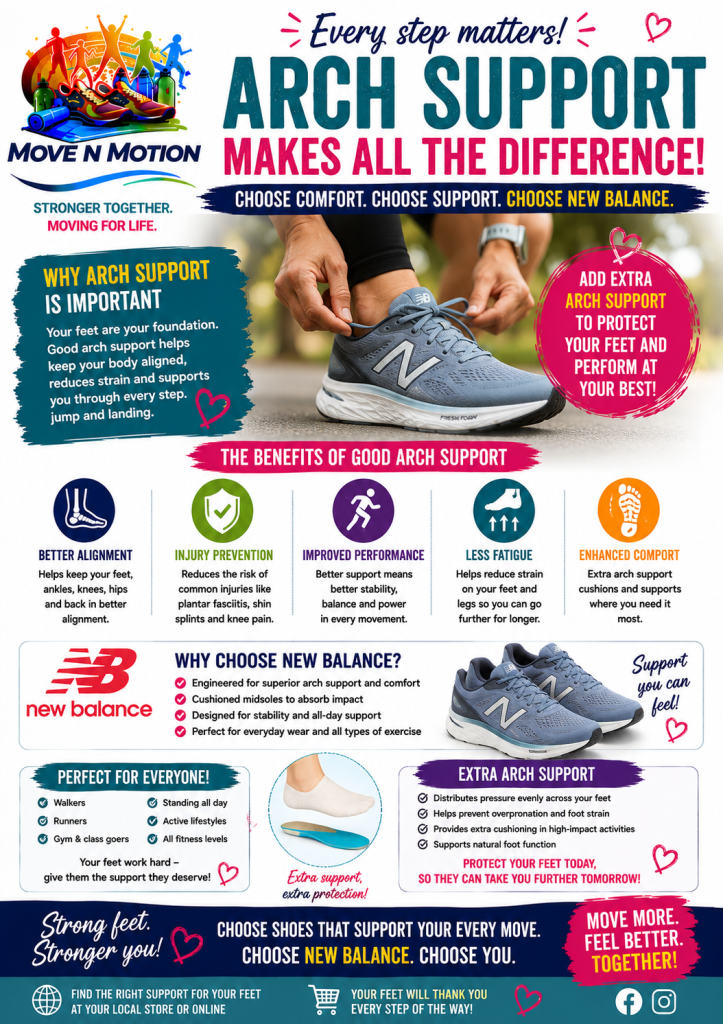
Brands such as New Balance offer a wide range of running and walking shoes with different levels of cushioning, stability and support. However, the “best” shoe isn’t necessarily the most expensive or the same shoe someone else wears—it’s the shoe that fits your feet comfortably and provides the support you need.
At Move N Motion, we encourage our participants to wear comfortable, supportive runners that allow them to move confidently and safely during class.
What Is Arch Support?
The arch is the curved area along the inside of your foot between your heel and the ball of your foot.
Your foot has a complex network of bones, muscles, tendons and ligaments that work together to support your body weight and absorb forces as you move.
Arch support refers to the way your footwear or an insole supports this area of the foot.
Good footwear can help distribute pressure across the foot and provide cushioning and stability during movement.
Why Is Arch Support Important During Exercise?
During exercise, your feet can experience significantly more force than they do during normal standing.
Think about the number of times your feet contact the ground during a fitness class.
You may perform:
- Squats
- Step-ups
- Walking
- Lunges
- Cardio exercises
- Side-to-side movements
- Balance exercises
- Light jogging
Every movement requires your feet to respond and adapt.
Comfortable, supportive footwear can help your feet cope with these demands.
Your Feet Affect More Than Just Your Feet
Your feet are connected to the rest of your body’s movement system.
The way your foot contacts the ground can influence movement through your:
Feet → ankles → knees → hips → pelvis
This doesn’t mean that poor arch support automatically causes knee, hip or back problems. However, footwear that doesn’t suit your feet can contribute to discomfort or make exercise less enjoyable.
That’s why finding footwear that feels stable and comfortable for you is so important.
Signs Your Runners May Not Be Supporting You Properly
It might be time to reassess your footwear if you regularly experience:
- Foot soreness after exercise
- Aching arches
- Heel discomfort
- Excessive foot fatigue
- Blisters or rubbing
- Your feet feeling unstable
- Shoes wearing unevenly
- Your toes feeling cramped
- General discomfort while exercising
These symptoms don’t necessarily mean you need more arch support. They can have many causes, including poor fit, worn-out shoes, training changes or an underlying foot problem.
If pain persists, it’s worth speaking with a podiatrist or other qualified health professional.
Choosing the Right Runners
When shopping for exercise shoes, don’t choose a pair simply because they’re popular or because someone else loves them.
Your feet are unique.
Look for runners that provide:
✔ A Comfortable Fit
Your foot should feel secure without being squeezed.
There should generally be enough room in the toe box for your toes to move comfortably.
✔ Appropriate Cushioning
Cushioning can make walking and exercise more comfortable, particularly if you’re spending a lot of time on hard surfaces.
✔ Good Heel Support
Your heel should feel secure inside the shoe without excessive slipping.
✔ Appropriate Arch Support
The shoe should feel supportive without creating uncomfortable pressure underneath your arch.
✔ Stability
You want to feel confident when changing direction, stepping, squatting and performing other movements.
What About New Balance?
New Balance is one example of a footwear brand that offers a variety of runners designed for different foot shapes, activities and support requirements.
Some models focus more heavily on cushioning, while others are designed with additional stability features.
The important thing is not simply choosing the New Balance brand—it’s finding a specific shoe that suits your feet, activity and individual needs.
A shoe that feels fantastic for one person may not be right for someone else.
Do You Need Extra Arch Support?
Not necessarily.
Some people find that the insole supplied with their runners provides enough support.
Others may benefit from an additional insole with more arch support.
An extra-supportive insole may be worth considering if:
- Your current shoes feel uncomfortable
- You have particular foot-support requirements
- Your feet become tired quickly
- You’ve been advised to use additional support by a podiatrist
- Your current footwear doesn’t provide the comfort you need
However, more support isn’t always better.
An insole that pushes too firmly into your arch can actually be uncomfortable.
The goal is appropriate support—not maximum support.
How to Introduce New Arch Support
If you’re adding an arch-support insole to your runners, don’t necessarily wear it for a full two-hour workout straight away.
Give your feet time to adjust.
You could start by wearing the shoes for a short walk and gradually increase the amount of time you spend wearing them.
Pay attention to how your feet feel.
If you develop significant pain, numbness, tingling or persistent discomfort, stop using the new support and seek professional advice.
Don’t Forget About Shoe Size and Shape
Arch support isn’t the only consideration.
A beautifully supportive shoe won’t help much if it doesn’t fit correctly.
Consider:
Length: Your toes should have enough room.
Width: Your foot shouldn’t feel squeezed from the sides.
Heel: Your heel should feel secure.
Toe box: Your toes should be able to move naturally.
Overall comfort: The shoe should feel good when you walk and exercise.
If possible, try shoes on later in the day, as feet can swell slightly throughout the day.
When Should You Replace Your Runners?
Exercise shoes don’t last forever.
Over time, cushioning and support materials can become compressed and less effective.
You may notice:
- The sole looks worn
- Cushioning feels flatter
- Your shoes no longer feel comfortable
- The tread is becoming smooth
- You start experiencing new aches or discomfort
- One side of the shoe is wearing significantly more than the other
There’s no single mileage figure that applies to everyone. How quickly your shoes wear depends on your body weight, activity, surfaces, shoe construction and how frequently you use them.
Instead of relying solely on a number, pay attention to the condition and feel of your shoes.
Your Runners Are Part of Your Exercise Equipment
When we think about exercise equipment, we often think about dumbbells, resistance bands, mats and fitness machines.
But your footwear is also part of your exercise setup.
A supportive, comfortable pair of runners can help you feel more confident while performing movements such as:
🏃 Walking and jogging
🦵 Squats
⬆️ Step-ups
↔️ Side movements
💪 Strength exercises
❤️ Cardio activities
⚖️ Balance exercises
The right footwear allows you to concentrate on your workout rather than worrying about uncomfortable feet.
Don’t Forget Your Socks!
Socks can also make a surprising difference to foot comfort.
Look for socks that:
- Fit properly
- Don’t bunch up
- Help manage moisture
- Don’t create pressure points
- Work comfortably with your runners
A well-fitting shoe combined with comfortable socks can help reduce rubbing and irritation.
Listen to Your Feet
One of the most important fitness habits you can develop is learning to listen to your body.
Mild muscle fatigue after exercise can be normal.
Persistent or worsening foot pain isn’t something you should simply push through.
If you experience ongoing pain, swelling, numbness, tingling or significant changes in how you walk, speak with an appropriate healthcare professional.
A podiatrist can assess your individual foot structure and movement and help determine whether you need particular footwear or orthotic support.
Move N Motion Tip 👟
Before heading to your next Move N Motion class, take a quick look at your runners.
Ask yourself:
Are they comfortable?
Do they fit properly?
Do I feel stable when exercising?
Are they worn out?
Do I have the support my feet need?
If the answer to these questions is no, it might be time to have a look at your footwear.
The Bottom Line
Your feet work hard every day—and even harder when you’re exercising.
Choosing comfortable, supportive runners can help you feel more comfortable and confident while you’re moving. Good arch support can be beneficial for some people, but there isn’t one perfect shoe or insole for everyone.
Rather than simply choosing the shoe with the most support, focus on finding the right combination of fit, comfort, cushioning and stability for your individual feet and activities.
And remember, if you’re experiencing persistent foot pain, getting professional advice is much better than trying to exercise through it.
At Move N Motion, we want you to feel strong, comfortable and confident every time you move.
👟 Look after your feet—and they’ll help carry you through your fitness journey!
Move N Motion
Stronger Together. Moving for Life.
Visit www.movenmotionfitness.com.au to find out more about Move N Motion group fitness classes.