Should You Eat Most of Your Carbohydrates at Lunch?
Understanding Carb Timing for Better Energy Carbohydrates have been one of the most misunderstood nutrients for years. Some people avoid them altogether, while others believe they’re the reason for weight gain. The truth is much simpler:
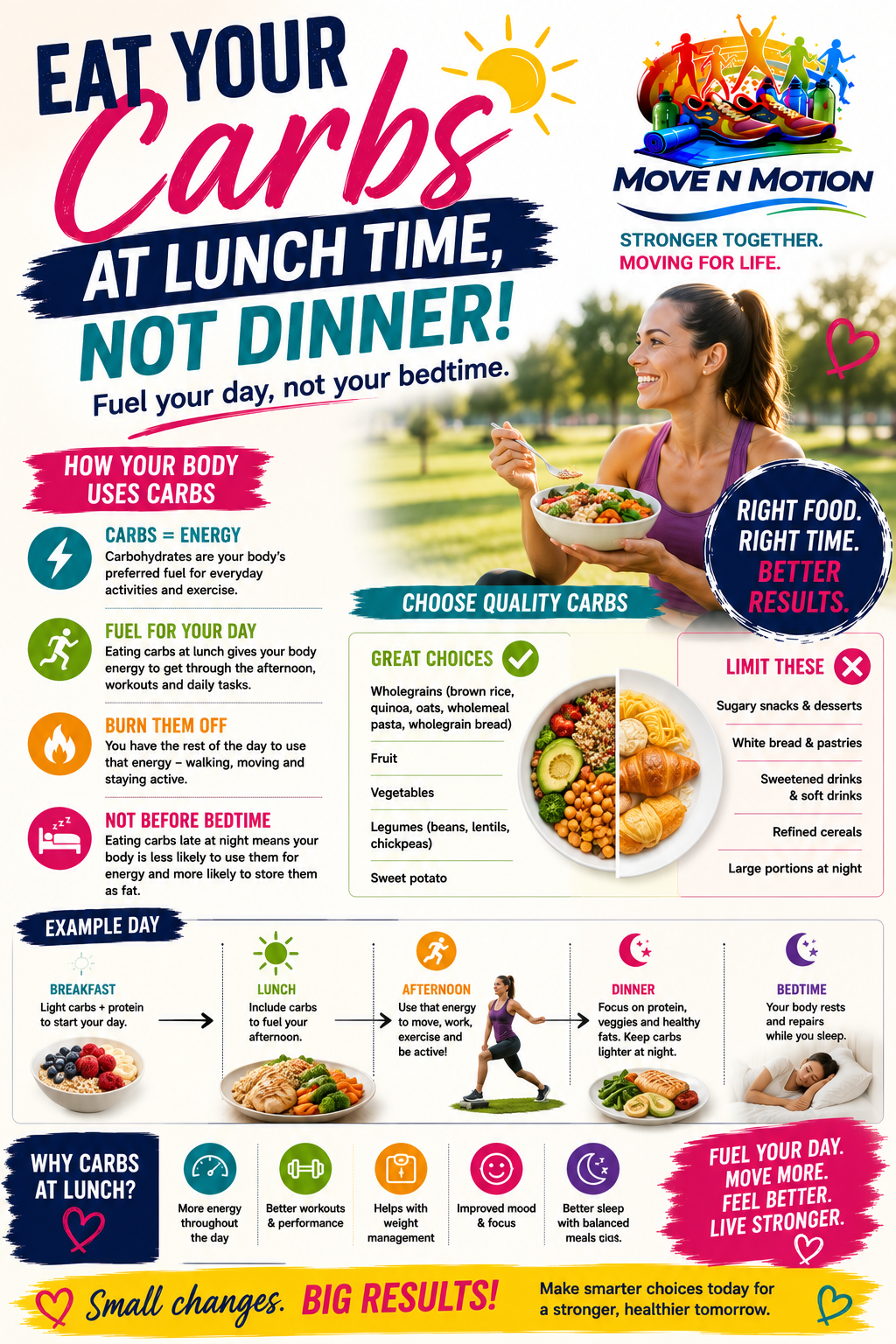
Carbohydrates are your body’s preferred source of energy, and when you eat them can influence how your body uses them.
At Move N Motion, we believe in balanced nutrition rather than restrictive diets. Instead of eliminating carbohydrates, many people can benefit from eating a larger proportion of them earlier in the day—particularly at breakfast and lunch—when there’s more opportunity to use that energy.
Let’s explore why carbohydrate timing matters and how you can make it work for your lifestyle.—
What Are Carbohydrates?
Carbohydrates are one of the three main macronutrients, alongside protein and fats.When you eat carbohydrates, your digestive system breaks them down into glucose, which enters your bloodstream. Your body then uses glucose to:
Fuel your muscles
Power your brain
Support your nervous system
Provide energy for everyday movement
Help you perform exercise
Any glucose that isn’t immediately needed can be stored as glycogen in your muscles and liver for later use.—
Why Are Carbohydrates Important?
Carbohydrates are often unfairly labelled as “bad,” but they’re actually essential for good health.
Healthy carbohydrates provide:
✅ Energy for exercise
✅ Better concentration and brain function
✅ Improved athletic performance
✅ Fibre for digestive health
✅ Vitamins and mineralsWithout enough carbohydrates, many people experience:
Low energyPoor concentration
Reduced exercise performance
FatigueIncreased cravingsThe goal isn’t to avoid carbohydrates—it’s to choose quality sources and eat them in amounts that suit your lifestyle.—
Why Eat More Carbohydrates Earlier in the Day?
Many people are busiest during the daytime.
You might:
Go to work
Exercise
Walk the dog
GardenCare for children
Complete household jobs
Attend a Move N Motion fitness class
All of these activities require energy.
Eating carbohydrates at breakfast and lunch gives your body readily available fuel for these activities.
For example:🥣 Breakfast: Oats with fruit🥪
Lunch: Wholegrain sandwich with chicken and salad🍠
Afternoon snack: Greek yoghurt with berriesThese meals provide sustained energy that your body can use throughout the day.—
What Happens When You Eat Carbohydrates?
After eating carbohydrates:
1. They’re broken down into glucose.
2. Glucose enters your bloodstream.
3. Insulin helps move glucose into your cells.
4. Your muscles and organs use it for energy.
5. Excess glucose is stored as glycogen.
6. If glycogen stores are already full and you continue to consume more energy than you use over time, the surplus can be stored as body fat.This process isn’t unique to carbohydrates—any excess calories, whether from carbohydrates, fats or protein, can contribute to weight gain if consumed consistently above your energy needs.—
Should You Avoid Carbohydrates at Dinner? Not necessarily.There’s no rule that says carbohydrates after 6 pm automatically cause weight gain. What matters most is: Your total daily calorie Intake the quality of your food Choices your activity Level your overall eating Pattern however, many people are far less active in the evening.If you’re eating a large carbohydrate-heavy meal just before sitting on the couch and then going to bed, you may simply have fewer opportunities to use that energy. For this reason, many people find it helpful to: Enjoy larger carbohydrate portions earlier in the day. Eat moderate portions at dinner. Focus on vegetables, lean protein and healthy fats in the evening.This approach may support energy during the day while still providing a satisfying evening meal.—
The Best Types of Carbohydrates
Not all carbohydrates are created equal.Choose these more often:🥔 Sweet potato🍚 Brown rice🌾 Oats🍞 Wholegrain bread🌽 Corn🍝 Wholemeal pasta🫘 Lentils🫛 Chickpeas🫘 Beans🍎 Fruit🥕 VegetablesThese foods contain fibre, vitamins and minerals while providing longer-lasting energy.—
Foods to Enjoy Less OftenTry to limit highly processed carbohydrates that provide lots of energy but fewer nutrients, such as: Sugary drinks, Lollies, Cakes, Pastries, White bread Sweet biscuit, Highly processed snack Food, these foods can cause rapid spikes and drops in blood sugar, leaving you feeling hungry sooner.—
What Should Dinner Look Like?
A balanced evening meal might include:🥩 Lean protein Examples:Chicken, Fish, Lean beef, Eggs, Tofu🥦 Plenty of colourful Vegetables examples:Broccoli Carrots, Beans, Capsicum, Salad🥑 Healthy Fat examples:Avocado Olive oil, Nuts, Seeds 🍠 A moderate serve of quality carbohydrates if appropriate for your energy needs and activity level.The exact amount depends on your goals and how active you’ve been throughout the day.—
Does This Apply to Everyone?
No.Carbohydrate timing should match your lifestyle. For example: People who exercise in the evening. You may benefit from including carbohydrates with dinner to help fuel your workout or support recovery afterwards.Shift workers. Meal timing will naturally differ based on work hours. Athletes, Those completing high-volume training often require carbohydrates throughout the day, including after evening sessions.Weight-loss goals. Some people find eating more carbohydrates earlier in the day helps with hunger control and maintaining energy, making it easier to stick to healthy eating habits.—
Healthy Lunch IdeasNeed inspiration?
Try these balanced lunches:🥗 Grilled chicken salad with quinoa🥪 Wholegrain wrap with turkey, salad and hummus🥔 Baked sweet potato topped with tuna and Greek yoghurt🍚 Brown rice with lean beef and vegetables🥣 Vegetable and lentil soup with wholegrain breadThese meals provide quality carbohydrates, protein and fibre to help keep you satisfied.—
Healthy Dinner IdeasFor dinner, consider meals such as:🐟 Grilled salmon with steamed vegetables🍗 Chicken stir-fry loaded with vegetables🥩 Lean steak with salad and roasted vegetables🥚 Omelette with mushrooms, spinach and tomatoes🫘 Lentil and vegetable curry with a modest serve of brown rice if desired—
Small Changes Make a Big Difference improving your nutrition doesn’t require a complete overhaul. Simple changes include:✔ Choosing wholegrain bread instead of white bread✔ Swapping soft drink for water✔ Eating fruit instead of sweets✔ Having oats instead of sugary cereal✔ Including vegetables with every meal✔ Planning healthy lunches ahead of time
Small improvements repeated consistently often lead to the biggest long-term results.—
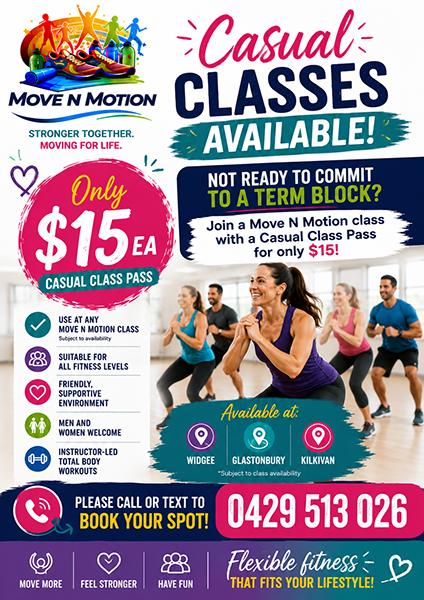
How Move N Motion Can Help healthy eating and regular exercise work best together. At Move N Motion, our instructor-led group fitness classes are designed to help you:Improve your cardiovascular Fitness build Strength increase energy Levels support healthy weight Management improve balance and Mobility feel stronger and more Confident our classes are suitable for all fitness levels and are held in Widgee, Glastonbury and Kilkivan, with new classes planned for Gympie.—
Final Thoughts Carbohydrates are not the enemy—they’re an important source of energy for your body and brain. For many people, eating a greater proportion of quality carbohydrates earlier in the day can help fuel work, exercise and daily activities. Pair that with balanced evening meals, regular physical activity and appropriate portion sizes, and you’ll be supporting both your energy levels and your long-term health.The best eating pattern is one that fits your lifestyle, supports your activity level and is sustainable over time. Focus on nourishing your body with whole foods, staying active and making gradual changes you can maintain.
Ready to fuel your body and move more?
Join a Move N Motion group fitness class and take the next step toward a healthier, stronger you.Visit: www.movenmotionfitness.com.au