
Understanding why neck engagement matters in core training
When people think about core exercises, they usually focus on the abdominal muscles, lower back, and sometimes the hips. The neck is often ignored, but it plays a critical role in how effectively and safely you perform core movements. The cervical spine (neck region) is directly connected to your thoracic spine, which in turn influences ribcage position, breathing mechanics, and abdominal activation.
If the neck is strained, over-flexed, or overextended during core exercises, the rest of the kinetic chain often compensates. This can reduce the effectiveness of the exercise and increase the risk of discomfort or injury. Proper neck engagement is not about “tensing” the neck unnecessarily, but about maintaining alignment and reducing unwanted tension while the core does the work.
A well-positioned neck supports better spinal mechanics, which helps you generate more stability through the torso.
The relationship between the neck and the core
The neck is part of the same stabilisation system that includes the diaphragm, abdominal wall, and pelvic floor. When these systems work together, you get better trunk control and movement efficiency.
In many core exercises—such as crunches, planks, dead bugs, or leg raises—the position of the head influences the rest of the spine. For example, if the chin juts forward during a plank, it often causes the upper back to collapse and the abdominal wall to disengage. Similarly, if you excessively tuck the chin during crunches, you may overload the superficial neck flexors instead of the abdominals.
The goal is coordination, not isolation. The neck should support the movement, not dominate it.
Common neck mistakes during core exercises
One of the most frequent issues is overuse of the sternocleidomastoid and other superficial neck muscles. This often happens when people try too hard to “help” themselves through a movement.
A few common patterns include:
- Pulling the chin aggressively toward the chest during crunches
- Letting the head drop back during planks, creating cervical extension
- Straining the neck forward during leg raises or sit-ups
- Holding tension in the jaw and upper traps during effort
These habits usually indicate that the core is not doing enough of the work, or that breathing and bracing are not properly coordinated.
Another common issue is “forward head posture” during exercises. This places unnecessary stress on the cervical spine and can lead to fatigue in the neck before the abdominal muscles are even challenged.
Maintaining neutral cervical alignment
Neutral alignment means the head is balanced over the shoulders, with the ears roughly in line with the mid-shoulder region. This does not mean the neck is rigid—it should still move naturally—but it should not be actively strained in any direction.
In core exercises, maintaining a neutral neck often involves:
- Keeping the gaze slightly forward or upward depending on position
- Avoiding excessive chin tuck or chin lift
- Keeping the back of the neck long rather than compressed
- Allowing the head to “float” rather than forcing it into position
Breathing also plays a key role here. If you hold your breath, neck tension tends to increase automatically. Controlled breathing helps distribute effort across the diaphragm and deep core muscles instead of overloading the neck.
How to properly engage the neck during core work
Neck engagement should be understood as gentle stabilisation rather than muscular effort. Think of it as “organising” the neck rather than contracting it.
A useful approach is:
- Lightly lengthen the back of the neck as if the crown of the head is reaching away from the torso
- Keep the jaw relaxed
- Maintain soft engagement through the deep neck flexors without visible strain
- Coordinate neck position with ribcage position and breathing
For example, during a plank, imagine your spine as a long continuous line. The neck is simply the continuation of that line, not a separate segment working independently.
During dynamic movements like crunches, the neck should follow the motion of the upper spine without leading it. The movement should originate from the ribcage and abdominals, not from the head.
Exercise-specific guidance
Plank variations
In a plank, the neck should remain neutral with the gaze slightly forward. A common mistake is dropping the head or looking too far forward, both of which disrupt alignment. Imagine holding a small object under your chin without clenching it—this helps maintain a neutral position without stiffness.
Crunches and sit-ups
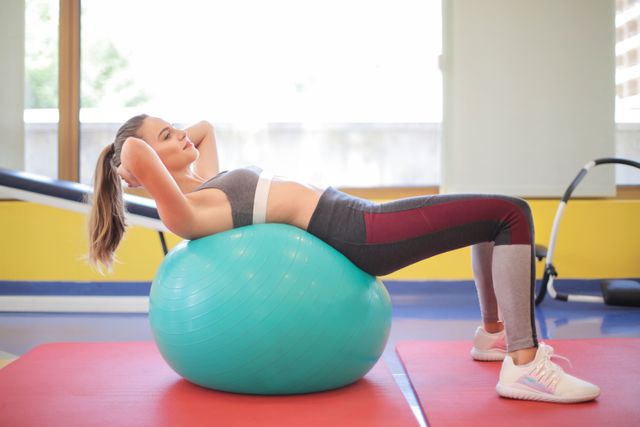
During crunches, avoid pulling the head forward. The hands should not be used to yank the neck. Instead, lightly support the head if needed while allowing the abdominal muscles to initiate the curl. The chin should stay slightly lifted away from the chest to avoid compression.
Dead bugs
In dead bug exercises, the neck often becomes tense because people lift the head unnecessarily. The head should remain supported on the ground or lightly elevated only if abdominal control allows it. If neck tension increases, it is usually a sign that the core is losing stability.
Leg raises
Leg raises frequently cause the head to press into the floor or lift involuntarily. The neck should remain passive but long. If you notice tension building, reduce range of motion in the legs rather than adjusting the head aggressively.
Breathing and neck tension connection
Breathing is one of the most overlooked factors in neck engagement. When people hold their breath during effort, the accessory breathing muscles in the neck—such as the scalenes—become overactive. This creates tightness and fatigue in the neck that is unrelated to the actual core work.
A better approach is:
- Inhale during preparation phases
- Exhale during exertion phases (such as lifting or bracing)
- Keep the throat and jaw relaxed throughout
This reduces unnecessary neck involvement and allows the diaphragm to do its primary role in stabilisation.
Building awareness and control
Improving neck engagement in core exercises is largely about awareness. Many people are not aware they are using their neck incorrectly until discomfort appears.
A practical way to improve this is to slow down movements. When tempo is reduced, compensations become more visible. You can also use mirrors or tactile feedback (such as lightly touching the neck) to notice unnecessary tension.
Over time, the goal is automatic coordination: the neck remains quiet while the core produces the work.
When neck strain indicates a bigger issue
Persistent neck strain during core exercises can indicate underlying problems such as poor thoracic mobility, weak deep core stabilisers, or breathing dysfunction. In some cases, it may also reflect previous neck injury or habitual posture issues from daily life.
If neck discomfort consistently appears during basic movements, it is often helpful to regress the exercise rather than pushing through. Simpler variations that reduce load on the neck while still training the core can help rebuild proper coordination.
Final thoughts on safe and effective practice
Effective core training is not just about abdominal strength—it is about integrated control of the entire trunk, including the neck. A well-managed neck position supports better spinal alignment, reduces unnecessary tension, and improves overall exercise quality.
Rather than trying to “hold” the neck in place with force, the goal is to organise it so it can stay relaxed while still aligned. When this happens, core exercises become smoother, safer, and significantly more effective over time.